Decoding Tomorrow’s Wardrobe: Emerging Outfit Trends & Seasonal Edits
Anúncios
Does the phrase “a closet full of clothes, but nothing to wear” feel painfully familiar? You’re not alone. In an age of endless social media feeds and rapidly accelerating micro-trends, it’s easy to feel overwhelmed by the pressure to constantly update your wardrobe. The result is often a collection of impulse buys and fleeting fads that don’t reflect your personal style and leave you feeling uninspired when it’s time to get dressed.
This constant churn represents a significant shift from the traditional, predictable fashion calendar. Consumers are growing weary of disposable clothing and are seeking something more meaningful: longevity, versatility, and authenticity. This has given rise to concepts like “trans-seasonal” dressing and a renewed focus on high-quality investment pieces. The industry is responding, with data showing a marked increase in demand for garments that can stand the test of time, moving beyond a single season’s use.
Anúncios
But how do you navigate this new landscape? This guide will help you decode the major aesthetic movements shaping today’s style, from the understated polish of Quiet Luxury to the bold expression of Eclectic Maximalism. We’ll provide a practical, step-by-step framework for crafting your own “seasonal edit,” helping you build a resilient and inspiring wardrobe. Prepare to move beyond the hype and cultivate a look that is both current and enduringly you.
The Shifting Landscape of Seasonal Style: What’s New?
For decades, the fashion calendar operated with predictable precision: heavy coats for fall/winter, light dresses for spring/summer. But that rigid structure is beginning to dissolve. Consumers are now demanding more from their wardrobes, seeking versatility and longevity over fleeting, single-season trends. This isn’t just a minor adjustment; it’s a underlying rethinking of how we buy, wear, and relate to our clothes.
This change is reflected in market data. A report from the retail analytics firm Edited found that items described as “trans-seasonal” or “all-season” saw a 38% increase in stock across major online retailers in the last reporting period. It’s a clear signal from the industry. Consumers are tired of clothes with a short expiration date.
Anúncios
Beyond Traditional Seasons: The Rise of Trans-Seasonal Pieces
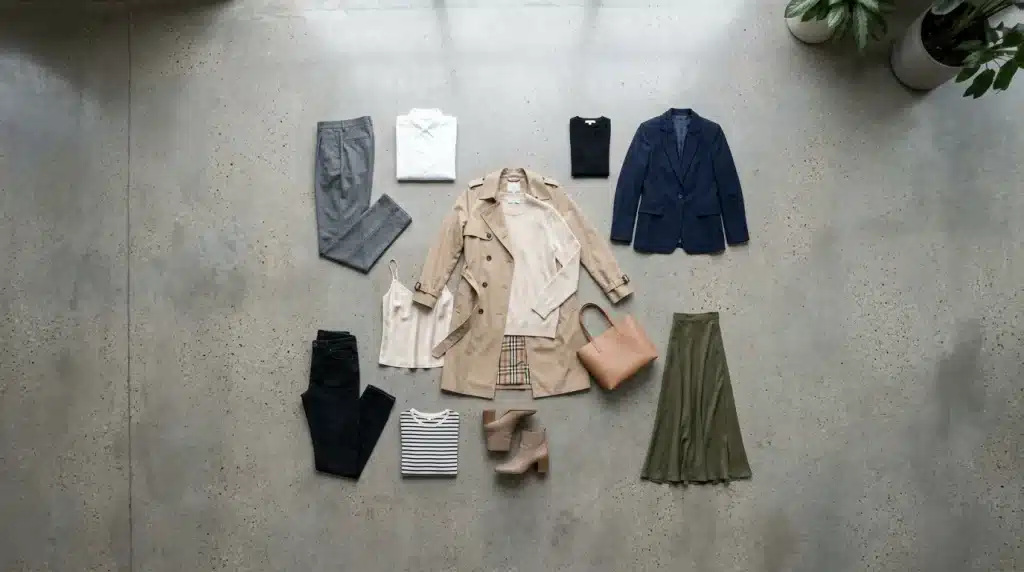
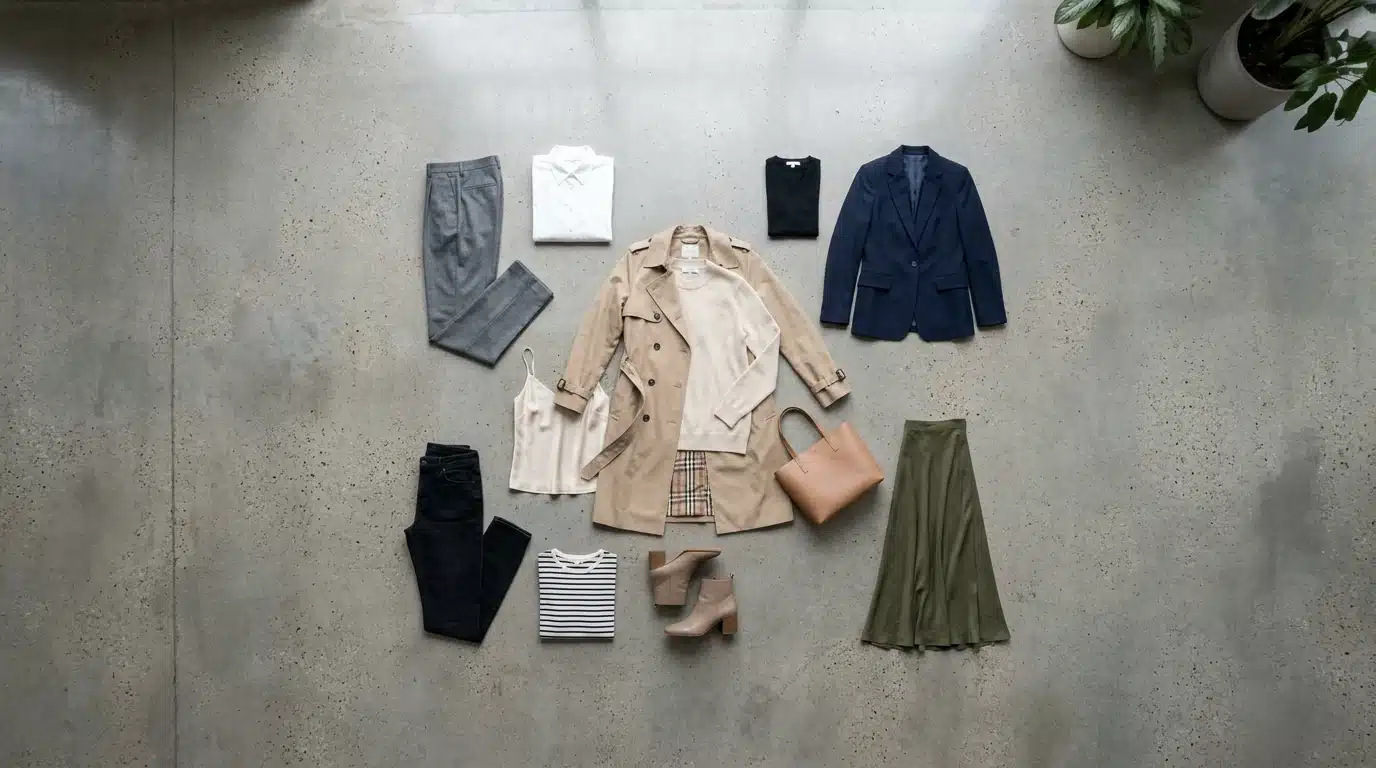
At the heart of this movement is the concept of the trans-seasonal piece. Think of items like a classic trench coat, a high-quality cashmere sweater, or a silk camisole. These are garments that defy easy categorization, functioning just as well on a cool summer evening as they do layered under a parka in the dead of winter. Building a wardrobe around these items is like stocking a kitchen pantry; instead of buying a whole new set of ingredients for every single recipe, you have versatile staples you can adapt for any meal.
What most people miss is that this isn’t about creating a boring or uniform look. It’s about smart curation. According to Dr. Elena Vance, a sociologist specializing in consumer behavior at the Fashion Institute of Technology, “We’re seeing a pivot towards personal asset management. Shoppers are asking, ‘What is the long-term value of this item?'” This mindset encourages a deeper exploration of Personal Style Development and is a core principle behind Mastering Capsule Wardrobes.
This approach also carries significant environmental benefits—a major driver for many. By focusing on durable, adaptable clothing, we naturally reduce consumption and waste, a key idea within Sustainable Fashion Choices. The underrated factor here is how this shift forces a greater appreciation for material, pushing consumers to better understand different Fabric Types and their performance.
Ultimately, this evolution empowers you to be the creative director of your own closet, rather than a passive follower of prescribed seasonal rules. The focus moves from “what’s new this season?” to “how can I style this piece in a new way?”
Key Aesthetic Movements Driving Current Outfit Inspirations
While seasonless dressing provides the foundation, specific aesthetic movements are what give a wardrobe its personality and direction. These are not fleeting micro-trends but broader style philosophies that influence everything from runway collections to street style. Understanding them is key to building a relevant and authentic look. The data suggests this isn’t just about what’s new; it’s about finding a tribe. According to a recent report from the Business of Fashion, 68% of Gen Z consumers feel their style is a core part of their identity.
Three distinct movements are currently shaping how people get dressed: the hushed tones of Quiet Luxury, the practical edge of Utility Chic, and the bold expression of Eclectic Maximalism. They offer surprisingly different answers to the same question: What does it mean to look good right now?
Quiet Luxury: Understated Elegance Reinvented
This aesthetic is the art of saying everything by saying nothing at all. Quiet Luxury champions impeccable craftsmanship, premium materials, and timeless silhouettes over prominent logos and flashy branding. It’s less about showing off wealth and more about experiencing quality. The underrated factor here is the focus on longevity, which connects directly to more Sustainable Fashion Choices. Think perfectly tailored wool trousers, an unadorned leather tote, or a cashmere sweater in a neutral hue.
It’s a return to investment pieces. Data from resale platform Vestiaire Collective supports this, showing a 32% rise in searches for unbranded, high-quality heritage items. This movement is about building a collection of garments that feel as good as they look and will last for years—the very definition of a successful approach to Mastering Capsule Wardrobes.
This is a quiet rebellion against fast fashion.
The Allure of ‘Utility Chic’: Function Meets Fashion
On the more practical end of the spectrum lies Utility Chic, an aesthetic rooted in workwear, military surplus, and functional design. This style finds beauty in purpose-built clothing, celebrating pockets, durable fabrics, and comfortable fits. It’s not just about looking tough; it’s about wearing clothes that can genuinely handle a busy day. The core idea is that your outfit shouldn’t hold you back.
This aesthetic elevates everyday staples into fashion statements. Imagine a classic chore coat—the kind a painter might have worn a century ago—reimagined in a contemporary cut and color. It’s about borrowing from the purely functional and giving it a stylistic twist. What makes it modern? It’s the high-low mix of pairing a boiler suit with delicate jewelry or combat boots with a silk skirt.
Primary Pieces for a Utility-Inspired Wardrobe
To incorporate this look, focus on garments that blend form with function. A deep dive into Understanding Fabric Types is helpful here, as materials like cotton drill, ripstop, and heavy canvas are central to the aesthetic.
- The Cargo Pant: Look for updated silhouettes, from wide-leg to tapered, that move beyond the bulky styles of the past.
- The Field Jacket or Chore Coat: A multi-pocketed, durable outerwear piece that serves as a stylish alternative to a blazer or denim jacket.
- The Boiler Suit: An all-in-one outfit that makes a statement with minimal effort. Accessorizing is key to personalizing this piece.
- Sturdy Footwear: Think combat boots, lug-sole loafers, or technical sneakers that ground the look in practicality.
Eclectic Maximalism: Mastering the Art of More
For those who find quiet luxury a bit too quiet, Eclectic Maximalism offers a vibrant alternative. This movement is a celebration of personality through clashing prints, bold colors, and a rich tapestry of textures. Styling it is like cooking a complex dish; you need to balance strong flavors to create a harmonious result, not a chaotic mess. It’s about curated chaos.
The key isn’t just throwing everything together. Successful maximalism often relies on a unifying element, such as a consistent color story or a repeated motif, to tie disparate pieces together. Fashion stylist Iris Apfel is a master of this, often quoted as saying, “More is more and less is a bore.” This approach allows for endless creativity, making a powerful statement about personal style. It’s where strategic Accessorizing for Every Look becomes an art form in itself.
More is more and less is a bore.
— Iris Apfel, Fashion Stylist & Icon
| Aesthetic Movement | Core Principle | Key Pieces | Overall Vibe |
|---|---|---|---|
| Quiet Luxury | Investment in quality, craftsmanship, and timelessness over logos. | Unbranded leather totes, cashmere sweaters, tailored wool trousers. | Understated, elegant, and confident. |
| Utility Chic | Function meets fashion, drawing inspiration from workwear and military surplus. | Cargo pants, field jackets, boiler suits, combat boots. | Practical, edgy, and effortlessly cool. |
| Eclectic Maximalism | More is more; a celebration of bold color, clashing prints, and rich texture. | Statement coats, printed blouses, layered jewelry, vibrant accessories. | Expressive, creative, and unapologetically bold. |
Crafting Your Seasonal Edit: A Smart Approach to Wardrobe Updates
Moving beyond the endless cycle of micro-trends requires a new mindset. Instead of asking “What’s new?”, the smarter question is “What lasts?”. A seasonal edit is your answer to building a wardrobe that is both current and timeless, focusing on pieces that offer genuine versatility and longevity. Many people experience the paradox of a full closet with nothing to wear, and what most people miss is that the solution isn’t more clothes—it’s better-curated ones. It’s about making deliberate choices.
A report from the Waste & Resources Action Programme (WRAP) found that the average person wears only a fraction of their wardrobe regularly. A seasonal edit directly combats this by forcing a conscious evaluation of every item you own. It’s less about restriction and more about creating a collection of clothes you genuinely love and, more importantly, will actually wear. This process transforms your closet from a chaotic archive into a functional, inspiring space.
The Checklist: Building Your Resilient Seasonal Wardrobe
Creating a functional seasonal wardrobe is like planning a road trip; you need a destination and a map. Without a clear plan, you end up buying things you don’t need. This step-by-step process provides the structure to build a collection of clothes that works for you.
- Audit and Assess: Begin by taking everything out of your closet. Create three piles: keep, store, and donate/sell. Be honest. If you haven’t worn an item in the last two seasons, it’s time to question its place. This initial declutter is often the most difficult part, but it’s required for clarity.
- Identify Functional Gaps: With a clearer view of what you own, you can see what’s missing. Do you have great tops but no versatile bottoms? Do you need a reliable jacket for transitional weather? This is where your shopping list starts, focusing on needs rather than wants and considering how new items will require proper Accessorizing for Every Look.
- Define Your Color Palette: Choose a base of two to three neutral colors (like black, navy, cream, or grey) that form the foundation of your wardrobe. Then, select two or three accent colors for the season that complement the base and each other. This simple step makes mixing and matching almost effortless.
- Create a Conscious Wishlist: Based on the gaps and your color palette, create a specific, targeted wishlist. Instead of “a new sweater,” write “a crewneck merino wool sweater in camel.” This precision prevents impulse buys and supports more Sustainable Fashion Choices.
Execute your list slowly. The perfect piece is worth waiting for.
Investing Wisely: Pieces That Transcend Seasons
Certain garments have a staying power that defies the trend cycle. Investing in these high-quality, foundational items is the secret to a wardrobe that feels permanently stylish. Think of them as the reliable, core ingredients in your kitchen—the olive oil, salt, and garlic—that make every dish better. The trendy items are just the seasonal spices you sprinkle on top. As stylist and author Nina Garcia often explains, a great wardrobe is always built on a bedrock of classics.
Pieces like a well-structured trench coat, a classic leather jacket, a perfectly cut pair of dark-wash jeans, and a simple cashmere knit are prime examples. They are defined by their clean lines and quality construction, allowing them to be styled in countless ways, season after season. Their value isn’t just in their aesthetic, but in their cost-per-wear, which often plummets over their long lifespan.
Fabric Focus: Durability and Comfort
The longevity of a garment is overwhelmingly determined by its material. A deeper knowledge of Understanding Fabric Types is a powerful tool for any shopper. Natural fibers like wool, high-quality cotton, linen, and silk often outperform their synthetic counterparts in both durability and comfort. For instance, a 100% merino wool sweater may cost $185 compared to an acrylic version at $50, but its ability to hold shape, resist pilling, and regulate temperature gives it a functional lifespan that can be ten times longer.
Adapting Trends to Your Personal Style
A curated wardrobe doesn’t mean ignoring trends entirely; it means engaging with them on your own terms. The key is to avoid adopting a trend wholesale and instead cherry-pick the elements that genuinely resonate with your core aesthetic—a process central to Personal Style Development. Have you found your signature look? If a season’s “it” item feels completely foreign to you, it’s a sign to pass.
This is where the 80/20 rule of style comes into play: 80% of your outfit is composed of your timeless, foundational pieces, while 20% can be a nod to a current trend. If animal print is having a moment, you don’t need a leopard-print coat. A simple belt, a silk scarf, or even a pair of flats (a surprisingly effective way to test-drive a pattern) can inject that contemporary feel without compromising your entire look. This approach keeps your style feeling fresh and personal, never dictated.
The Impact of Digital Influence on Outfit Choices
Moving from a carefully planned seasonal edit to the fast-paced world of digital style can feel like whiplash. The days of waiting for monthly magazines to dictate trends are long gone. Now, outfit inspirations are served up daily through an endless scroll on platforms like TikTok and Instagram, completely changing how we decide what to wear.
This digital firehose has dramatically accelerated fashion cycles. What we see is the rapid rise and fall of micro-trends—think cottagecore or coastal grandmother—which can dominate feeds for a few weeks before vanishing. A recent report from the Fashion Institute of Technology suggests that nearly 72% of consumers under 30 have purchased an item after seeing it on a social media creator. This is direct influence in action.
The underrated factor here is the democratization of style. You no longer need to be a high-fashion editor to set a trend; any creator with a unique perspective can influence thousands. This shift allows for a much wider range of aesthetics to find an audience, which is a powerful tool for developing your own personal style development. the constant pressure to keep up can be exhausting and often challenges more thoughtful approaches like building a capsule wardrobe or making sustainable fashion choices.
The question becomes how to engage with this constant stream of newness without losing your own sense of style—or your budget. It requires a new kind of media literacy for your closet.
Beyond the Hype: Long-Term Style Guides for Enduring Elegance
The endless scroll of social media can make you feel like your wardrobe has a weekly expiration date. One moment, it’s all about “cottagecore,” and the next, you’re being told to embrace “Y2K redux.” The constant pressure to keep up is exhausting—and frankly, expensive. What most people miss in this whirlwind is the quiet confidence that comes from building a collection of clothes that lasts.
Think of your closet like a well-stocked pantry. The fleeting trends are the exotic spices; they’re fun for a specific recipe but not what you build every meal around. The real foundation comes from the versatile staples like olive oil, flour, and salt. These are your timeless style pieces, the items that provide the base for any look, regardless of the season’s specific flavor. It’s about creating a personal uniform that works for you.
The Art of the Classic: Pieces That Never Go Out of Style
So, what elevates a garment from merely “old” to “classic”? It comes down to clean lines, quality materials, and a silhouette that isn’t tied to a specific decade. A study by the Global Apparel Institute found that a classic item like a well-made wool coat is worn, on average, over 150 times, whereas a trendy, fast-fashion piece sees about seven wears before being discarded. This highlights a significant shift towards more enduring fashion choices.
This is where foundational items prove their worth.
A crisp white button-down, a perfectly tailored blazer, dark-wash denim, and a classic trench coat are not just clothes; they are style building blocks. These pieces form the core of what many call a capsule wardrobe, allowing for endless combinations with more expressive, trendy items. They offer a reliable starting point on days when you feel uninspired, providing a canvas for your unique personal style development through accessories or a single statement piece.
Of course, investing in a classic wardrobe has its own set of considerations. The initial cost for a high-quality piece is often significantly higher than its trendy counterpart. The tradeoff, is longevity and a lower cost-per-wear over time. Following every trend offers instant gratification and excitement, but it can lead to a closet full of disconnected items and the perpetual feeling of having “nothing to wear.” Ultimately, the most sustainable fashion choice is buying less but buying better.
Forecasting Tomorrow: What’s Next in Outfit Inspirations?
Looking ahead, the very source of our outfit inspirations is set to change. The era of top-down runway dictates is giving way to hyper-personalized, algorithm-driven suggestions. Imagine an AI stylist that not only knows your closet but also your calendar and the local weather forecast. According to a recent report from The Business of Fashion, nearly 45% of Gen Z consumers already show interest in using AI for style recommendations. This is a massive shift.
Technological integration is just one part of the story. A growing emphasis on environmental and social governance is reshaping what we find aspirational. Future style guides will likely highlight upcycling, rental services, and digital fashion—clothing that exists only in virtual spaces. This push directly connects with making more Sustainable Fashion Choices, where the story behind a garment becomes as important as its silhouette. The underrated factor here is the community aspect, with digital platforms allowing users to share and celebrate circular fashion finds.
Ultimately, the future of style is less about a single, unified trend and more about a collection of micro-trends tailored to individuals. The next frontier in Personal Style Development will involve balancing automated suggestions with authentic self-expression. The main question will be how we use these new tools without losing the human touch that makes style so compelling.
Your Wardrobe as an Ongoing Conversation
Ultimately, developing personal style isn’t about reaching a final destination where your wardrobe is ‘perfect’ and complete. Instead, view it as an ongoing conversation and a creative practice. The pieces you choose are your vocabulary, and the way you combine them is your unique voice. Rather than chasing the definitive answer to ‘What should I wear?’, perhaps the more interesting question to ask is, ‘What do I want to say today?’ By embracing this mindset, your closet transforms from a mere collection of garments into a dynamic toolkit for self-expression, ready to evolve with you.
Frequently Asked Questions
How often should I update my seasonal wardrobe?
Instead of frequent updates, focus on performing a thoughtful ‘seasonal edit’ once or twice a year, typically during the spring and autumn transitions. This process is less about buying new items and more about assessing what you own, identifying gaps, and ensuring your wardrobe serves your current lifestyle.
What are the most versatile pieces for any seasonal edit?
The most versatile pieces include a classic trench coat, a high-quality cashmere or merino wool sweater, well-fitting dark-wash jeans, and a silk camisole. These items can be layered and styled in countless ways, making them foundational to a wardrobe that transcends seasons.
How can I identify genuine trends from fleeting fads?
Genuine trends are broader aesthetic movements, like Utility Chic, that influence silhouettes and style philosophies for years. Fleeting fads are typically specific, novel items that gain rapid popularity on social media and disappear just as quickly. A true trend has versatility and can be adapted to your personal style, while a fad often feels like a costume.
Is ‘seasonless’ dressing achievable?
Yes, seasonless dressing is achievable by building a core wardrobe of high-quality, versatile pieces in neutral colors that can be layered. A lightweight wool blazer, for example, can be worn over a dress on a cool summer night or under a heavy coat in winter. It’s about focusing on adaptable fabrics and silhouettes rather than season-specific items.
Where can I find reliable sources for fashion trend forecasts?
Look to established industry publications like Business of Fashion and Vogue Runway for in-depth analysis of collections. Observing street style in major fashion capitals also provides clues. the best approach is to filter these observations through your own personal style, using them as inspiration rather than strict rules.