Mastering Your Wardrobe: A Beginner’s Guide to Outfit Inspirations and Seasonal Style
Anúncios
Staring into a closet packed with clothes, yet feeling like you have nothing to wear, is a uniquely modern frustration. It’s a paradox that leaves you feeling defeated before your day has even begun. This isn’t a personal failing or a lack of taste; it’s the result of a broken system. We’ve been taught to chase fleeting trends and hunt for bargains, accumulating a chaotic collection of individual items that don’t speak to each other or reflect who we are.
The solution isn’t more clothes—it’s more intention. True, lasting style comes from a foundational understanding of your own aesthetic, lifestyle, and what makes you feel confident. It involves shifting your mindset from a reactive consumer to a thoughtful curator of your personal brand. By learning the principles of proportion, fit, and versatility, you can build a wardrobe that works for you, not against you. This approach replaces closet chaos with clarity and empowers you to get dressed with ease and self-assurance every single day.
Anúncios
This guide provides the blueprint to make that transition. We will first walk you through the process of decoding your personal ‘style DNA’ to create a solid foundation. From there, you’ll learn how to build a versatile capsule wardrobe with core essentials that transcend seasons. Finally, we’ll demystify the formulas stylists use—like the ‘Rule of Three’ and strategic color pairing—to transform individual pieces into cohesive, ‘put-together’ outfits. Prepare to move from being overwhelmed by your wardrobe to mastering it.
Understanding Your Personal Style DNA
Before you buy another piece of clothing, you need a blueprint. Most people approach their wardrobe reactively, chasing trends that fade within months and accumulating items that never quite feel right. The result is a closet full of clothes but nothing to wear. True style begins with an honest audit of who you are, what you do, and how you want to present yourself to the world. It is a deliberate act of self-definition.
This process is less about fashion rules and more about personal forensics. It’s like stocking your kitchen pantry; you must have the foundational ingredients—flour, salt, oil—before you can even think about attempting a complex recipe. Without this base, you are just collecting exotic spices with no real plan.
Anúncios
Identifying Your Core Aesthetic
Your core aesthetic is the consistent theme running through your most-loved outfits. It’s your style signature, independent of fleeting fads. What most people miss is that this identity already exists within their current wardrobe, buried under impulse buys and items they felt obligated to own. A report from the Ellen MacArthur Foundation suggests that clothing utilization—how much we actually wear our clothes—has decreased by around 36% in the last 15 years. Defining your aesthetic reverses this trend by ensuring every piece has a purpose.
To start decoding your own style, ask yourself some direct questions. Don’t overthink it; your first instinct is usually the most telling. Answering these helps you build a filter for what belongs in your life.
- Go-To Pieces: Which 5-10 items do you reach for constantly? What do they have in common (fabric, color, silhouette, mood)?
- Style Icons: Who do you admire for their style, and what specific elements of their look appeal to you? Is it their color palette, their use of tailoring, or their casual confidence?
- Lifestyle Audit: Realistically, what do you do most days? Your wardrobe should primarily serve your actual life, not a fantasy one (a closet full of gowns is useless if you work from home).
- Emotional Connection: When have you felt your best in an outfit? Describe that feeling. Was it powerful, comfortable, creative, or elegant? This emotional data is surprisingly critical.
Once you have a clearer picture, you can begin to explore how current styles might fit into your world, rather than the other way around. Looking at emerging outfit trends and seasonal edits becomes a source of inspiration, not a set of commands.
Body Shape & Fit Essentials
Forget the outdated and restrictive advice about dressing for a specific “fruit shape.” A far more effective approach is to understand the principles of proportion, fabric, and fit. These are the tools that allow you to create the silhouettes you desire, regardless of your natural body shape. The goal is not to hide your body but to learn how to use clothing to create balance and draw attention where you want it.
This is about mastering the language of clothes. For instance, a well-placed seam, the drape of a particular fabric, or the length of a hem can completely alter the perception of a garment. According to celebrity stylist Anya Chen, “Fit is the difference between wearing a piece of clothing and bringing it to life. An extra half-inch on a sleeve or an incorrectly placed dart can sabotage the entire look.” This highlights why understanding your measurements and the power of a good tailor is non-negotiable.
Instead of memorizing rules, focus on what makes you feel confident. Do you prefer a defined waist or a more relaxed, flowing line? A strong shoulder or a soft, sloping one? Knowing these preferences is more powerful than any chart. This knowledge allows you to intelligently sift through style guides and trend forecasts, selecting only what enhances your personal vision instead of conforming to a generic mold.
Building a Versatile Capsule Wardrobe: The Beginner’s Blueprint
The idea that more clothes lead to more options is a carefully constructed myth. A closet overflowing with impulse buys and one-off trend pieces doesn’t create style; it creates decision fatigue. The capsule wardrobe is the antidote, a curated collection of highly versatile items that work together seamlessly. It’s not about deprivation, it’s about control.
This approach forces you to define your personal style with surgical precision. Instead of chasing fleeting trends, you invest in a foundation of quality pieces that form the backbone of your look. A report from the Boston Consulting Group revealed that the average consumer buys 60% more clothing items than they did 15 years ago, yet wears them for half as long. A capsule wardrobe directly combats this wasteful cycle. It’s time to build a smarter system.
Core Items for Every Season
The foundation of any successful capsule wardrobe rests on a set of non-negotiable essentials. These are the workhorses of your closet, pieces defined by their classic tailoring, neutral color palettes, and ability to be styled in dozens of ways. Think of them as the primary colors of your sartorial palette. You can create almost anything with them.
While the exact items can shift based on your climate and lifestyle, some universals remain. A perfectly tailored blazer, a crisp white button-down shirt, dark-wash denim that fits impeccably, and a simple black dress or pair of trousers are starting points. What most people miss is that the goal isn’t to own a specific list, but to find your version of these archetypes. Is your “perfect blazer” a structured menswear-inspired cut or a soft, unstructured linen piece? The details are where your personality shines through.
| Category | Must-Haves (The Foundation) | Nice-to-Haves (The Personality) |
|---|---|---|
| Tops | White T-shirt, Silk Camisole, Striped Long-Sleeve, Neutral Cashmere Sweater | Graphic Tee, Statement Blouse, Bodysuit |
| Bottoms | Dark-Wash Straight-Leg Jeans, Black Tailored Trousers | Leather Pants, Pleated Midi Skirt, Wide-Leg Linen Trousers |
| Outerwear | Classic Trench Coat, Black Blazer | Leather Jacket, Oversized “Shacket”, Colorful Wool Coat |
| Dresses/Jumpsuits | Little Black Dress (LBD) or Jumpsuit | Slip Dress, Floral Maxi Dress, Denim Jumpsuit |
Maximizing Versatility with Accessories
Your core clothing items create the canvas, but accessories are the brushstrokes that complete the masterpiece. This is where you can play with trends without overhauling your entire wardrobe. A simple jeans-and-tee combination can be transformed from casual weekend wear to chic evening attire with the right additions. Think a silk scarf, a structured leather belt, and layered gold necklaces.
This is the most cost-effective way to keep your foundational wardrobe feeling current. A well-chosen handbag or a pair of statement earrings can tap into the mood of the moment. By keeping your core simple, you give yourself permission to experiment with accessories that reflect the latest emerging outfit trends and seasonal edits without committing to expensive, short-lived clothing items. It’s a low-risk, high-reward strategy.
Smart Shopping Strategies for Your Capsule
Building a capsule requires a radical shift in your shopping mindset. You are no longer hunting for a quick fashion fix; you are curating a long-term collection. The key metric to adopt is cost-per-wear. A well-made blazer for $250 that you wear 100 times costs $2.50 per wear. In contrast, a trendy $50 top worn only twice before it pills or fades costs a staggering $25 per wear — a surprisingly inefficient use of funds.
Adopt a strict “one in, one out” policy to prevent closet clutter from creeping back in. Before purchasing a new item, ask yourself if it serves a clear purpose and can be styled with at least three other pieces you already own. This isn’t about restriction; it’s about intentionality. This process transforms your closet from a chaotic archive of past mistakes into a functional tool for daily self-expression. The mental clarity this provides is, frankly, liberating.
Fit is the difference between wearing a piece of clothing and bringing it to life. An extra half-inch on a sleeve or an incorrectly placed dart can sabotage the entire look.
— Anya Chen, Celebrity Stylist
| Concept | Key Principle | Actionable Tip |
|---|---|---|
| Personal Style DNA | Style is an expression of self, not a reaction to trends. | Audit your 5-10 most-worn items to find common threads in color, fit, and fabric. |
| Capsule Wardrobe | Fewer, more versatile pieces create more outfit options. | Invest in high-quality neutrals that can be styled in at least three different ways. |
| Seasonal Edits | Adapt your core wardrobe with layers and fabrics, don’t replace it. | Use a trench coat for spring/fall and add thermal layers under core pieces for winter. |
| Outfit Formulas | Cohesive looks are built on simple architectural rules. | Apply the ‘Rule of Three’: combine a main piece, a layering item, and a finishing accessory. |
Decoding Seasonal Edits: Adapting Your Style Year-Round
Most people treat their wardrobe like four separate, non-interacting closets for each season. This is a colossal mistake. True style comes from fluidity, not rigid rules. Adapting your core pieces is less about swapping entire outfits and more about mastering the art of the seasonal edit, a concept explored in depth within our guide to emerging outfit trends.
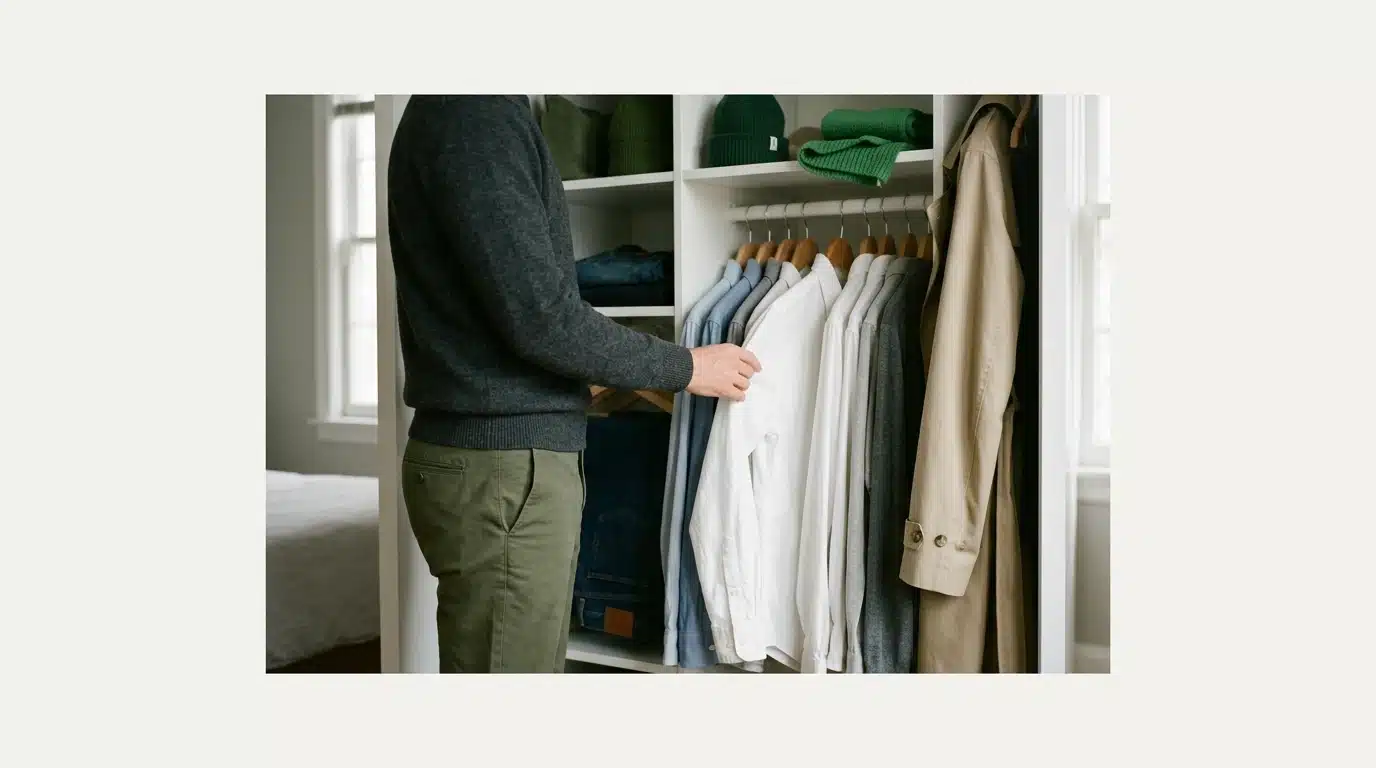
The underrated factor here is fabric. A simple cotton t-shirt serves a different purpose than one made of merino wool, which a Cornell University study found regulates body temperature with 37% more efficiency in variable weather. Why wouldn’t you want that versatility? For transitional weather, think in terms of layering — not just piling on clothes, but combining textures and weights intelligently. A silk camisole under a cashmere sweater, topped with a trench coat, creates a system you can adjust throughout the day.
This is your new mantra: think in systems, not just items.
For spring and fall, a lightweight trench coat, quality denim, and breathable knits are your foundation. Summer demands linen, chambray, and loose-weave cottons to manage heat (and look effortlessly chic). When winter arrives, the focus shifts to thermal base layers, chunky wool, and a well-insulated outer coat. The pieces from your capsule wardrobe don’t get retired; they simply gain new partners to face the weather.
From Inspiration to Implementation: Crafting Cohesive Outfits
Let’s be blunt: the idea that great style is an innate gift is a myth sold to you to buy more things. True style mastery isn’t about having a magical “eye”; it’s about understanding the architecture of an outfit. Knowing the rules gives you the creative freedom to break them effectively. These formulas are your scaffolding, not your cage.
The goal is to move from a closet full of clothes to a wardrobe full of actual outfits. This requires a shift in thinking from individual items to cohesive combinations. Stop focusing on the what. Focus on the how.
The ‘Rule of Three’ for Effortless Style
One of the most effective tools for this is the ‘Rule of Three’. This principle suggests that an outfit feels more balanced and visually appealing when it consists of three key elements. Think of it as a main piece, a secondary layering item, and a finishing accent, such as a dress (one), a leather jacket (two), and a statement necklace (three).
What most people miss is that this isn’t just about counting items; it’s about creating visual interest and depth. A simple t-shirt and jeans combination is just a starting point. But add a structured blazer? The look is complete. The third piece is what elevates the entire ensemble from simply being “dressed” to being “styled.”
Color Combinations That Always Work
Color can either make or break your look, and overthinking the color wheel is a common pitfall for beginners. Instead, focus on combinations that are practically foolproof. A monochromatic look—wearing different shades and tints of a single color—is instantly technical. Think navy trousers with a sky-blue silk shirt.
Another reliable strategy is pairing a bold color with a neutral. Camel and red, olive green and cream, or charcoal and cobalt blue are classic pairings for a reason. According to a study by the Parsons School of Design, outfits built on a clear two- or three-color palette are perceived as 62% more intentional by observers. The underrated factor here is restraint; you don’t need a rainbow to make an impact.
To put this into practice, follow these steps:
- Select Your Statement Piece: Start with the one item you want to wear. When selecting your statement piece, it helps to understand which styles are shaping the current season to ensure your choice feels fresh. This is your anchor.
- Build a Neutral Foundation: Pair your statement piece with neutrals like black, white, gray, navy, or beige. If your hero piece is a loud floral blouse, pairing it with simple black trousers immediately grounds the entire look.
- Add a Third Color or Texture: Using the ‘Rule of Three,’ introduce a third element. This could be a handbag, shoes, or a jacket in a complementary or analogous color to your statement piece, tying everything together.
Beginner’s Guide to Pattern Mixing
The phrase pattern mixing often conjures images of fashion week chaos, but it’s a surprisingly accessible skill. Sounds complicated, doesn’t it? It’s not. The easiest way to succeed is by varying the scale of the prints while keeping them in the same color family. Think of it like making a salad—you want the satisfying crunch of large croutons mixed with finely shredded carrots, not two competing types of giant lettuce leaves.
A classic pinstripe suit, for example, can easily handle a small-scale geometric print tie. The suit’s stripes are linear and spaced out, while the tie’s pattern is dense and contained. Because both likely share a foundational color like blue or grey, the combination feels intentional rather than accidental.
Starting with Subtle Prints
If you’re new to this, don’t immediately jump to mixing leopard and plaid. Begin with what I call “neutral patterns”—prints that are so classic they almost function as a solid color. These include thin Breton stripes, small polka dots, subtle ginghams, and micro-florals. These are your training wheels for mastering pattern play.
Try pairing a striped t-shirt with a floral scarf, or find inspiration by looking at some of the emerging outfit trends and their seasonal edits, which often showcase how designers are combining textures. The key is that one pattern should be dominant, and the other should act as an accent. This creates a visual conversation between the pieces, not a shouting match.
Ultimately, a successful mixed-pattern look relies on a shared color to unify the different elements. This common thread (pun intended) is what makes the whole thing work, turning potential chaos into curated confidence.
Staying Ahead: Navigating Current Style Trends Without Overspending
Let’s be honest: chasing every fleeting micro-trend is a financial trap and a creative dead end. The constant pressure to buy the latest “it” item results in a closet full of clothes with a shelf life shorter than a carton of milk. True style isn’t about having everything that’s new; it’s about selectively incorporating what’s relevant to you. The goal is to update your look, not replace your identity.
Building a wardrobe this way is like seasoning a dish. You don’t throw out the main ingredients every time you discover a new spice. Instead, you sprinkle it in to enhance the overall flavor. The key is discerning which trends are worth a sprinkle and which are just empty calories.
Identifying Key Trends Worth Investing In
The firehose of social media makes every new item seem required. But how do you separate a lasting shift from a momentary fad? A recent analysis from the Global Fashion Institute suggests that most social media-driven “micro-trends” have a peak relevance of just 12 to 16 weeks. They burn bright and fast. A more sustainable approach is to look for macro-trends—larger shifts in silhouettes, fabrics, or color palettes.
Look for trends that appear across different contexts: on the runway, in street style, and in retail stores. If a concept like relaxed-fit denim or the utility jacket keeps appearing, it likely has more staying power. These are the pieces worth considering. What most people miss is that the most impactful trends are often about fit and texture, not just a single, loud garment. Understanding these larger movements is important, and a deep dive into decoding tomorrow’s wardrobe can provide the necessary clarity.
Budget-Friendly Trend Integration
Once you’ve identified a trend, you don’t need to overhaul your entire wardrobe. The most effective method is to integrate newness through affordable, high-impact pieces. This is where strategic shopping and accessories become your secret weapons.
Fast fashion offers a tempting path for this, with its low prices and rapid turnover. The obvious pro is accessibility; you can experiment with a trendy color or pattern for less than the cost of a nice dinner. The significant con, is the questionable quality and the environmental toll—that $15 top often doesn’t survive more than a few wash cycles. A better strategy involves a mix of smart, targeted purchases.
Consider these methods for a low-cost update:
- Focus on Accessories: A new handbag in a trending shape, a bold piece of jewelry, or a silk scarf can completely change the vibe of a classic outfit—and they often have more longevity than a specific piece of clothing.
- The “One Piece” Rule: Instead of buying a full trendy look, purchase just one key piece. For example, add a pair of metallic flats or a sheer blouse to your existing collection of basics. This singular item can modernize dozens of existing combinations.
- Thrift and Consignment: Secondhand shopping is a goldmine for exploring trends without the high cost or ethical concerns of fast fashion. You can often find high-quality versions of trendy items from previous cycles.
By focusing on these smaller additions, you can stay current and explore emerging seasonal edits without breaking the bank. This approach ensures your personal style evolves intelligently, rather than being dictated by a fast-paced trend cycle designed to keep you constantly buying.
Your Wardrobe as a Living Document
Having mastered the fundamentals of personal style, capsule building, and outfit composition, what comes next? It’s tempting to view your newly organized wardrobe as a finished project, a static collection to be maintained. But the real power lies in seeing it as a living document, an evolving archive of your life. The pieces you choose and the way you wear them will, and should, change as your career shifts, your confidence grows, and your life takes you in new directions.
Your style is not a destination to be reached but a language you are now fluent in. Rather than asking ‘What should I wear?’, you can begin to ask more compelling questions: ‘Who do I want to be today?’ and ‘What story does this outfit tell?’ Your wardrobe is no longer a source of stress but a dynamic tool for self-expression, ready to adapt and grow right alongside you.
Frequently Asked Questions
How can I find my personal style if I’m a complete beginner?
Start by auditing the clothes you already love and wear frequently. Look for common themes in their fit, color, fabric, and overall mood. This is your starting point. Also, consider your daily activities and find style icons whose look you admire, then analyze the specific elements you’re drawn to.
What are the absolute must-have items for a basic capsule wardrobe?
A basic capsule should include high-quality, versatile, and neutral pieces. Key items are a well-fitting pair of dark-wash jeans, a tailored blazer, a crisp white button-down shirt, and a simple black dress or trousers. The goal is to find your perfect version of these classic archetypes.
How do I make my outfits look more ‘put together’?
Focus on two key areas: fit and the ‘Rule of Three.’ First, ensure your clothes fit your body perfectly, using a tailor if needed. Second, build outfits with three distinct elements—such as pants, a shirt, and a blazer—to add visual depth and intention to your look.
Is it possible to be stylish on a tight budget?
Absolutely. The key is to shop smarter, not cheaper. Focus on an item’s cost-per-wear rather than its initial price tag. Invest in versatile basics you’ll wear for years, shop secondhand for quality pieces, and use affordable accessories to keep your core wardrobe feeling fresh and current.
What’s the easiest way to adapt my wardrobe for different seasons?
Master the art of layering instead of buying four separate seasonal wardrobes. Use your core capsule pieces as a base year-round. Adapt them for cold weather with thermal layers, cashmere sweaters, and wool coats, and for warm weather by opting for breathable fabrics like linen and cotton.